
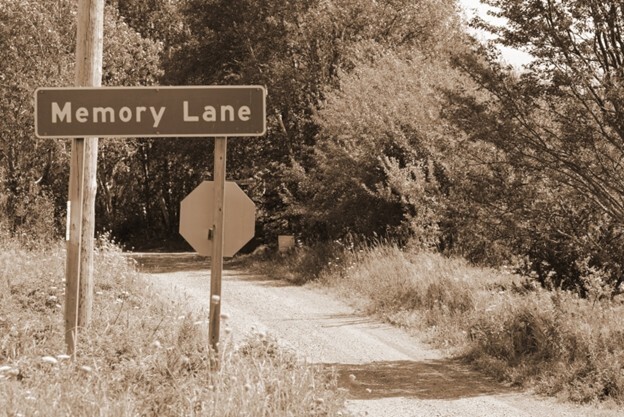
People in the modern day often look back to the past wishing they could go back to those days that seem far away. People do this for many reasons – either because they are stressed with life or they want to go back to a time where they felt more connected to other people or when they had fewer responsibilities. These are the days we have lost to time, but is there a way we can bring them back? And should we be so eager to focus on these memories?
Talking with others in the Co-op community, I discovered many shared fond memories from back in the pandemic. “I wish I could go back to when the pandemic started since I had the most fun during those moments,” explained teenager “J”. “J” focused on the fun he had when the pandemic started and wished he could go back there despite the suffering caused to other people because of the countless deaths and global economic catastrophes. His nostalgia blinds him from the tragedy of that past world, but it is also because the pandemic never affected him personally in a negative way.
“A time I find myself wishing I could go back to is, honestly, Amino era. So like 2017-2021,” reflected “M”. Others had similar attachments to specific social media communities more than specific eras of their life. “I find myself looking back on my younger years, the times when I was around people on Amino I genuinely cared for. A place I found where I could escape reality. Perhaps more.”
One thing everyone has in common is a desire to return to youthfulness when we had fewer responsibilities and more fun. “I wish I could go back to summertime when I was younger,” shared visual arts teacher Ms. Michaud. “Like my 20s, and tell myself to cherish the long warm days instead of working so hard.” This might be because members of Gen Z may have rushed into their adulthood and now they are reminiscing on their missed childhood.
“I would like to go back to a time when I had a studio space, was exhibiting, and traveled a lot,” shared fellow visual arts teacher Ms. Horvath. “Basically a time when I had less responsibilities to elder family members.”
Theater teacher Mr. Meikle rejects the draw of nostalgia. “I want to live a life without regrets because that just makes you sad. And I made a lot of mistakes when I was young and foolish.”
For other adults, nostalgia for youth may allow for immature mistakes when they come with a youthful body free of adult ailments. “I’d like to go back to life before the diagnosis,” explained adult “D”. “We had just gotten married and bought a house with so much to look forward to. It would be nice to be in a body that had fully functioning muscles.”
Is the draw of nostalgia stronger for a past world – or a past self for most people? “I could stay up late and wake up early and not feel tired,” explained Michaud. “My body was strong and always full of energy. I would take better care of myself.”
When adults work as teachers around teenagers all day, does that make the draw of nostalgia stronger for them? Do they have a better understanding of how to help young people enjoy the present moment instead of falling prey to the draw of nostalgia?
However most young people are nostalgic for peer social groups which remain untouchable to the adults who surround them. “I miss my ability to role play instead of texting simple messages,” explained teen “M”. “I don’t role play any more, I lost my attentiveness. I lost the feeling or desire I had to have connections to my friends. I’m completely okay with not talking to anyone or being alone (now).”
“I miss a lot about those times. The friends I had,” explained teen “A”. “The people that cared a lot about me. If I could, I’d grasp them one more time. Even if they were painful times – those were times when I felt more confident in myself. When I wasn’t easily angered by things.” For young people during the pandemic, everyone was at home without responsibility. Even though everyone was locked away in their own home, it felt like a virtual family as the outside world went quiet.
Many other topics of nostalgia also emerged through this reporting. Going back in time for teens, purchases were more affordable and technology was simpler to use. For adults, youthful passions were pursued like making music in a band and studying in school. Smells of food and favorite songs when we were younger were also mentioned. But many respondents also circled back to feeling nostalgic for earlier versions of themselves. And maybe they then realized that nostalgia can be a tool for change in the future.
“Specifically in 2019,” explained teen “O”, “I had the freedom of the internet to connect to during those times before covid. I can still play a lot of video games that reminded me of those times. They give me a life lesson as of now to actually accept that I won’t be able to go back to fix myself. However, it gave me the opportunity to see that you can still fix yourself as much as you can, as you have enough time to fix the person you are.”
It is this acceptance that you cannot change your past self, but that the future always holds new possibilities for someone. No matter how broken, or how many mistakes they made.
Until we make those changes, we’ll always have nostalgia to help us feel better about the troubles of the world that seem to get washed away as we pull up our memories. “Loud music, fun friends, humid afternoons and nights,” recalled Michaud. “I couldn’t afford air conditioning, so I used to just deal with it. And looking back, it doesn't seem that bad.”
So, after reading this, what are your thoughts of nostalgia? Is it just a thing that happens as a form of trauma response to the world around us? A recollection of memory that reminds us of a simpler time? A motivator? A captivator that doesn’t let us free? It is ultimately up to you to decide, reader. It is your nostalgia after all – not mine.